


Accelerated Career Pilot Training in Illinois
JUMP TO SECTION… Program, Training, Locations, Career Path, Equipment, Cost, Requirements, Founder, FAQ’s
Professional Aeronautics Certification (PAC)
The Professional Aeronautics Certificate (PAC) is an accelerated career-pathway program strategically designed to take students from zero experience to Commercial Pilot License (CPL) in just 12–16 months without requiring a traditional four-year aviation degree.
 Regulated exclusively by the Federal Aviation Administration (FAA), PAC serves students in Jacksonville, St. Augustine, Ormond Beach, Daytona Beach, and across Central and North Florida. PAC was built to address the global pilot shortage by producing highly trained, safety-focused, jet-ready graduates prepared for careers in commercial aviation, corporate flight departments, and airline operations worldwide.
Developed in partnership with McHenry County College, JB Aviation Flight School, and former Embry-Riddle Aeronautical University professor, Dr. Chris Johnson, PAC produces commercial pilots in fraction of the time and cost as traditional college flight programs.
Program Highlights
- Non-degree certificate focused strictly on FAA licenses required for employment
- Part-time (standard program): 15–20 hours per week for 12–16 months
- Simple progression: Private → Instrument → Commercial → Instructor Pilot (optional)
PAC is designed for:
- Traditional college students who want a non-aviation degree
- Career-changing adults who do not want or need a degree
- Military veterans
- High school seniors seeking an early start in aviation
Program Structure & FAA Certification Pathway
PAC students complete one certification per semester in a clear, linear progression:
PPL → IFR → CPL → CFI / CFII
Semester 1: Private Pilot License (PPL)
- Earn FAA Private Pilot License (single-engine)
- Train for safe flight under visual flight rules (VFR)
- ~60-70 flight hours + ~5 simulator hours
Semester 2: Instrument Rating (IFR)
- Earn FAA Instrument Flight Rating
- Learn to fly in clouds and low-visibility conditions under instrument flight rules (IFR)
- ~60 flight hours + ~25 simulator hours
Semester 3: Commercial Pilot License (CPL)
- Earn FAA Commercial Pilot License (single-engine)
- ~200 total flight hours + ~50 simulator hours (minimum combined experience)
- Eligible for paid commercial flying positions
Semester 4 (Optional): Certified Flight Instructor (CFI/CFII)
- Certified Flight Instructor (CFI)
- Certified Flight Instructor Instrument (CFII)
- Preferential consideration for open instructor positions
Multi-Engine (ME), Airplane (optional)
- Multi-Engine rating and optional Multi-Engine Instructor (MEI) certification
- One-on-one instruction with flexible scheduling
PAC uses a blended learning format combining in-person classroom instruction, structured online coursework, and individualized flight and ground training. Students may rent aircraft between semesters to continue building flight time.
Training Format & Weekly Commitment
PAC is structured as a part-time professional program.
Part-Time Commitment: 15–20 hours/week for 12–16 months
- 3–4 hours of structured classroom instruction (typically evenings)
- 5–7 hours of flight training (typically three days per week)
- 5–10 hours of independent study and flight preparation
Flight schedules require flexibility due to weather, maintenance, and resource availability.
Locations
Ground school is held at MCC’s Catalyst Campus in Woodstock, IL.
Flight training is conducted by JB Aviation Flight School at Galt Airport located just outside of O’Hare’s airspace, which provides access to:
- Controlled and uncontrolled airspace
- Seasonal weather systems
- Low- and high-density traffic environments
- Picturesque cross-country corridors
Illinois’ seasonal flying conditions train students to safely manage a variety of weather.
Career Path After Graduation
Upon earning their CPL (~250 total flight hours), graduates typically build time as:
- Certified Flight Instructors (CFI/CFII)
- Charter or cargo Pilots
- Corporate flight crew
- Aerial survey or specialized operators
Once pilots reach 1500 total hours and obtain an Airline Transport Pilot (ATP) certificate, they are eligible for positions at airlines and advanced corporate and cargo operations. PAC is structured to produce competitive applicants prepared for long-term aviation careers, not simply certificate completion.
Why the Pilot Shortage Matters
A sustained workforce shortage in aviation is expected for the next 10-20 years due to:
- Mandatory retirement at age 65
- Aging aviation workforce
- Continued global air travel growth
- Increased training pipeline constraints
- Military-to-civilian pilot transition declines
- Expansion of unmanned systems and advanced air mobility aircraft
These factors have strengthened long-term demand for commercial pilots, allowing them to earn higher salaries and enjoy faster career progression than ever before.
Return on Investment & Career Outlook
This hiring environment is widely considered one of the strongest in aviation history.
- Strong pilot shortage projected for the next 10–20 years
- First officers enter regional airlines at ~$80,000-$100,000 annually
- Rapid upgrade timelines compared to previous decades
- Mid-career salaries often exceed $300,000 annually, working 13-15 days per month
PAC requires less time and often less total investment than most bachelor’s degree programs while offering access to a high-income professional career path.
Training Aircraft & Equipment
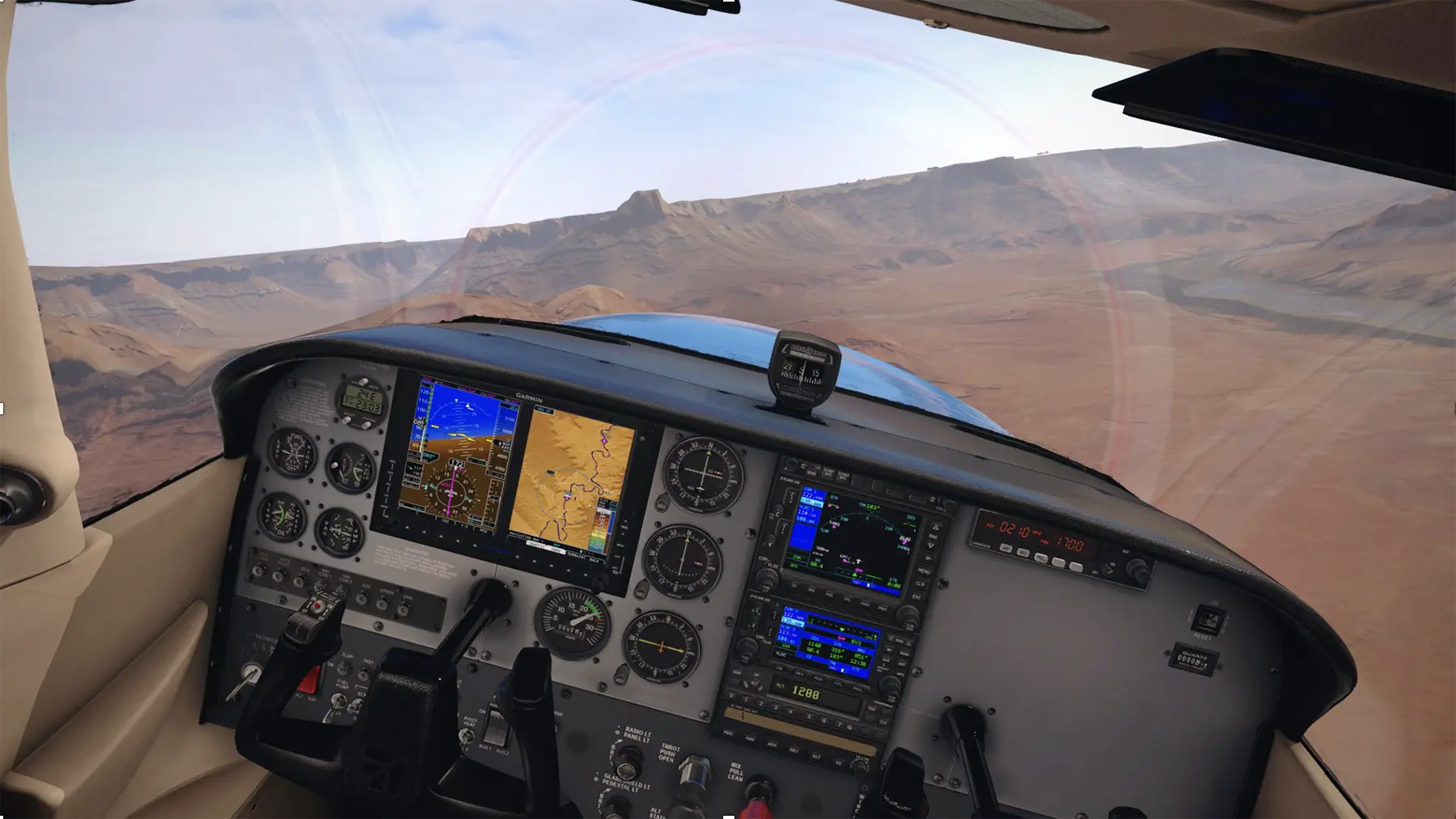
PAC prepares students for both legacy and modern cockpits.
- Legacy Cessna 172 + Cessna 172 G500 Technologically Advanced Aircraft (TAA)
- Analog “6-pack” instruments + digital “glass cockpit” avionics
- Advanced Aviation Training Device (AATD) simulator → 50 loggable hours toward CPL
- ForeFlight Electronic Flight Bag (EFB) for digital flight planning, GPS tracking, traffic, weather, and digital document/logbook management
Training in both analog “6-pack” aircraft and TAA aircraft ensures graduates are prepared and comfortable transitioning to turbine and airline-style avionics.
Cost of Pilot Training in Illinois
Estimated cost is $73,255 from zero hours to CPL, but total cost varies depending on hours in aircraft type, individual proficiency and certifications pursued:
Scroll right to left
| PAC Course | Tuition | Flight Fees | Exam Fees | Other Fees | TOTAL |
|---|---|---|---|---|---|
| Private Pilot | $500 | $19,718 | $1,200 | $3,200 | $24,618 |
| Instrument Pilot | $500 | $23,525 | $1,200 | $300 | $25,525 |
| Commercial Pilot | $500 | $20,862 | $1,200 | $550 | $23,112 |
| PAC TOTAL | $73,255 | ||||
| Flight Instructor (Optional) | $500 | $10,747 | $3,100 | $500 | $14,847 |
| Multi-Engine (Optional) | $0 | $14,245 | $2,000 | $250 | $16,495 |
Financing options vary by applicant:
- Private financing
- Aviation-specific loan programs
- Government Workforce Pell Program (anticipated late 2026)
- Scholarship opportunities (see FAQs)
For detailed pricing and financing guidance, please CONTACT US.
Admissions Requirements
Applicants must:
- Be at least 17 years old during their first semester
- Obtain a FAA First-Class Medical Certificate
- Demonstrate academic discipline and professional commitment
Because FAA medical standards are strict, applicants are strongly encouraged to CONTACT US prior to scheduling their exam to avoid preventable delay
Program Founder & Academic Leadership
Dr. Chris Johnson, PhD, CFI, CFII, MEI

The PAC program was developed by Dr. Chris Johnson, an aviation educator, Air Force veteran, commercial pilot, and Certified Flight Instructor. Prior to PAC, Dr. Johnson was a professor at Embry-Riddle Aeronautical University.
He earned his PhD in Engineering from University of Wisconsin–Madison, where he conducted FAA-funded research focused on improving pilot training safety and human-machine systems. His academic work contributed to advancements in unmanned systems and aviation training technologies, including development of a weather simulator used to improve pilot and drone training. Dr. Johnson also founded Pilot Training System, the aviation industry’s only fully free online ground school platform, which has grown to over 72,000 YouTube subscribers.
Start Your Pilot Training in Illinois
If you’re ready to begin a professional aviation career without spending four years in a traditional degree program, PAC offers a direct and accelerated path.
APPLY NOW or CONTACT US to learn more.